Section 13: The Judges' Table - Final Summary & Candidate Scorecard
Executive Summary: This closing section turns the module into a way to grade yourself. We replay the arc and name the signal each phase was recording, then lay out the 100-point scorecard: six dimensions, weighted toward the deep dives and the honesty of the numbers, because those are where a 401 analytics interview is won. We describe the two common ways candidates lose the hour, map score bands to readiness and remediation, and close with the questions that are this one in disguise: metrics systems, ad-click aggregation, view counters, trending lists and product analytics.
The architecture diagram felt like the deliverable, but the interviewer wasn't grading the boxes. They were grading whether each box came out of a number, a failure, or a promise you had already written down. This section names what they were listening for.
The Arc, Replayed as Signal
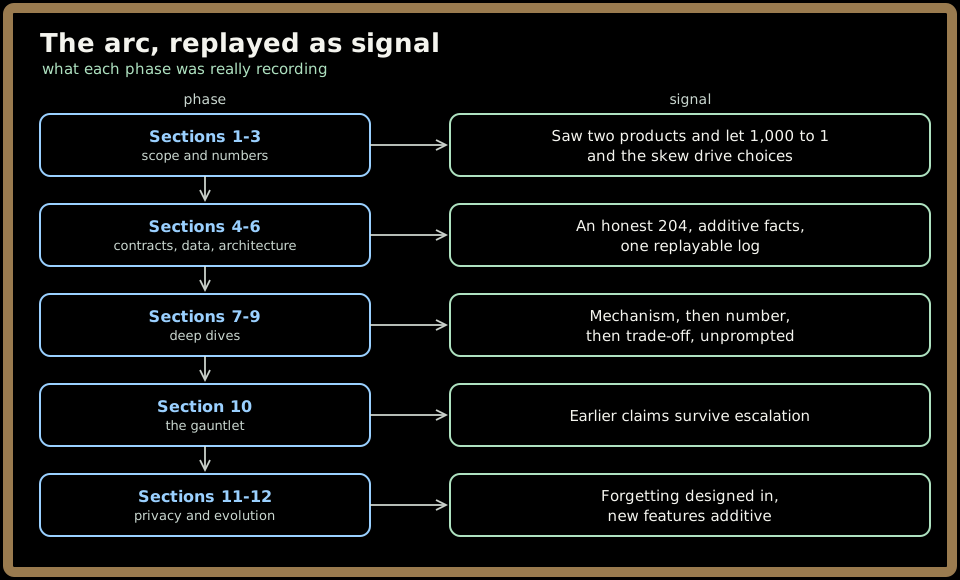
Notice what is missing from the right-hand column: no signal is "knows Kafka" or "has heard of HyperLogLog." Section 3 earned its credit not by computing 1.16M hits/s but by noticing that the 1,000:1 ratio points the wrong way: writes are cheap appends, each read is a scan-and-merge, so the paths had to split. Section 8 earned credit by pricing the watermark: 5 minutes catches ~99% of hits, and the other ~1% is why a batch run exists.
Key Insight: At 401 the interviewer assumes you know the parts. What they're testing is whether you can time them: which number must be right in 60 seconds, which in an hour, which only after 72 hours. A candidate who answers "how many users did Trailhead have Tuesday?" with "provisionally this, finally that, frozen as Friday ends" has shown the whole design in one reply.
Sign in to continue reading
The rest of this lesson is available with a free account. Signing in with Google or Microsoft is free.
Sign in to read the full lesson