Section 13: The Judges' Table - Final Summary & Candidate Scorecard
Executive Summary: This section turns the module into a grading tool. It replays the arc as signals, then lays out the 100-point scorecard: five dimensions, each described by what a top answer and a point-losing answer sound like for this problem. Score bands map your total to a readiness level, and a catalog shows where this question hides in real loops.
The architecture diagram you drew for Maya's comment was worth about a quarter of the points. The interviewer was grading something else the whole hour. Did you notice that a five-million-viewer stream breaks the "chat room" model? Did your arithmetic decide anything? When told "just use Redis Pub/Sub," did you defend the log with a reason? You can't reliably earn points you can't name, so this section names them.
The Arc, Replayed as Signal
The module moved in five phases; here's what each one recorded.
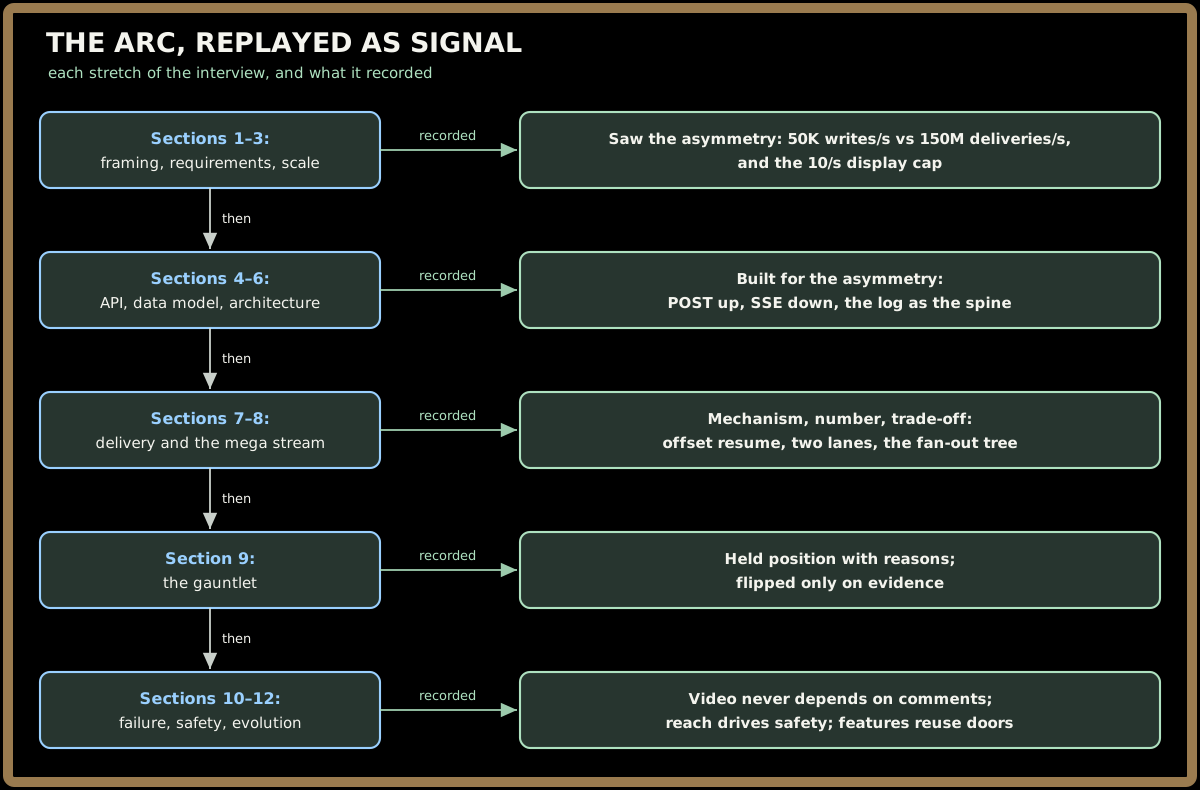
Key Insight: None of these signals is "knew Kafka" or "knew SSE." Each is about letting a measured number decide the design. The 3,000× gap between writes and deliveries made fan-out, not storage, the hard part. The 10/s cap made the 5M-viewer stream select rather than deliver. The 10 Gbps one router would need is why the tree exists.
Quick check before moving on:
Sign in to continue reading
The rest of this lesson is available with a free account. Signing in with Google or Microsoft is free.
Sign in to read the full lesson