OSI Model — Part 3: The Upper Layers (5–7)
What is this?
One more time with the postal chain. Part 2 covered the trucks and highways that physically move the package. The upper three layers are the human side of the chain — the part that cares about meaning. Layer 5 is the ongoing conversation you're having with your friend across many letters. Layer 6 is the language and the sealed envelope — making sure you both speak the same tongue and that prying eyes can't read it. Layer 7 is the letter itself: the actual message, the thing that mattered all along.
These are the layers backend engineers live in. You almost never write Ethernet frames, but you write HTTP handlers, choose JSON vs. Protobuf, debate TLS termination, and open WebSockets every single day. This is where networking stops being plumbing and starts being your application.
The one-line idea: Layers 5–7 are where data becomes meaningful — they manage the conversation (L5), make data portable and private through serialization and encryption (L6), and define the protocols your app actually speaks (L7).
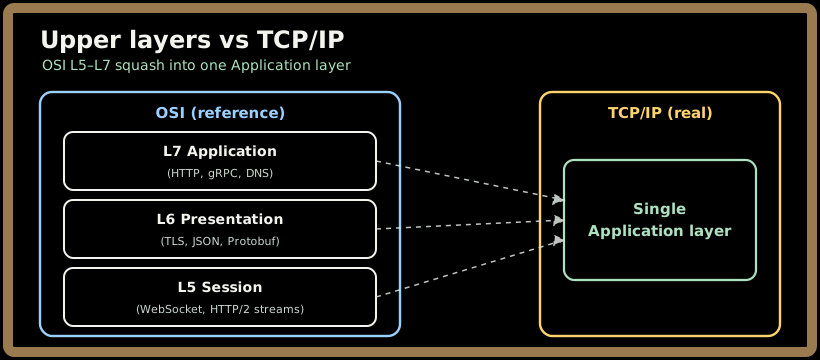
One honest caveat up front, carried from Part 1: in the real TCP/IP model, these three OSI layers are squashed into a single "Application" layer. The Internet doesn't enforce a hard boundary between them. But OSI's finer slicing gives us precise words — "TLS is L6, the HTTP request is L7" — and that precision is exactly why we keep them separate when we reason about systems.
Sign in to continue reading
The rest of this lesson is available with a free account. Signing in with Google or Microsoft is free.
Sign in to read the full lesson