DNS — Part 5: Real-World Architecture & Operations
What is this?
We've spent four parts on how DNS works in principle — the phone book, the tree, the resolution walk, the design trade-offs. This part is the field trip: we open the cabinets and look at the actual products that serve the internet's names. When you say "we'll use Route 53" or "CoreDNS handles cluster DNS," what are you really reaching for?
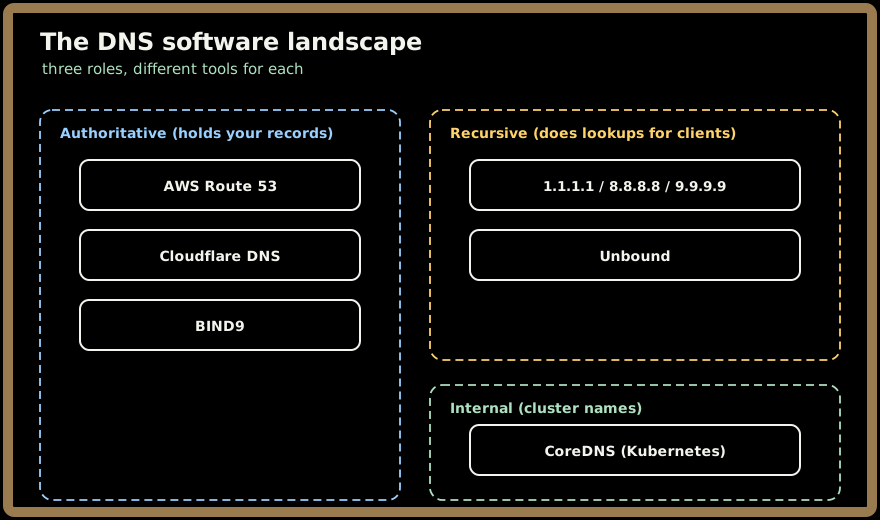
Think of it as touring the companies that run the world's phone book. Some run the authoritative side (Route 53, Cloudflare DNS, BIND) — they hold and serve your zone's truth. Some run the recursive side (1.1.1.1, 8.8.8.8, Unbound) — the concierges from Part 3 that do the lookups for everyone. And some run a private, internal phone book (CoreDNS inside Kubernetes). Same principles you already know, now in named, production form.
The one-line idea: real-world DNS is a small set of battle-tested products — managed authoritative services (Route 53, Cloudflare), Anycast public resolvers (
1.1.1.1,8.8.8.8), encrypted transports (DoT/DoH), classic server software (BIND/Unbound/dnsmasq), and CoreDNS for clusters — each occupying a clear slot in the architecture you've already learned.
Sign in to continue reading
The rest of this lesson is available with a free account. Signing in with Google or Microsoft is free.
Sign in to read the full lesson