DNS — Part 4: DNS in System Design (Staff/Principal Level)
What is this?
In a system-design interview, everyone says "put a load balancer here." What separates a strong candidate is what they do with the boxes they can't see — and DNS is the most invisible, most load-bearing of them all. It rarely shows up as its own diagram box, yet it's quietly underneath CDN routing, global failover, multi-region traffic steering, and service discovery. Reason about it well and you sound like someone who has actually operated production systems.
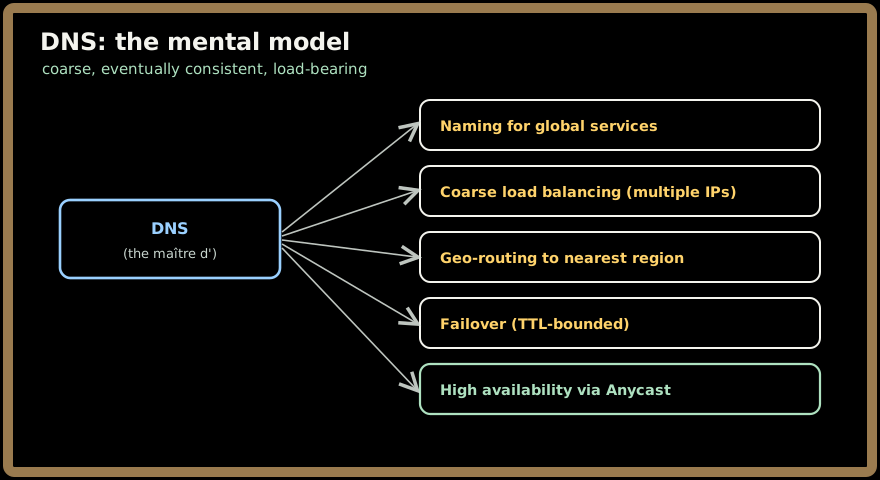
Think of DNS here as the maître d' of the whole internet (the phone-book analogy from Part 1, promoted): it doesn't cook the food or balance the load itself, but it decides which door every guest walks through — which region, which IP, which CDN edge. This chapter turns the mechanics from Parts 1–3 into the judgment calls and the mock-interview answers you'll be graded on.
The one-line idea: in system design, DNS is a coarse, globally-cached, eventually-consistent traffic director — powerful for naming, geo-routing, and slow failover, but bounded by TTL, so you must know exactly when to lean on it and when to reach past it to real load balancers.
Sign in to continue reading
The rest of this lesson is available with a free account. Signing in with Google or Microsoft is free.
Sign in to read the full lesson