DNS — Part 2: Architecture & Global Hierarchy
What is this?
Imagine the world's postal system. There's no single building that knows every address on Earth — that would be impossible to run. Instead, mail is sorted in layers: the international hub figures out which country, the national service figures out which region, the regional depot figures out which street, and the local carrier knows your exact door. Each layer only knows enough to hand the letter one step closer. No single failure stops the mail.
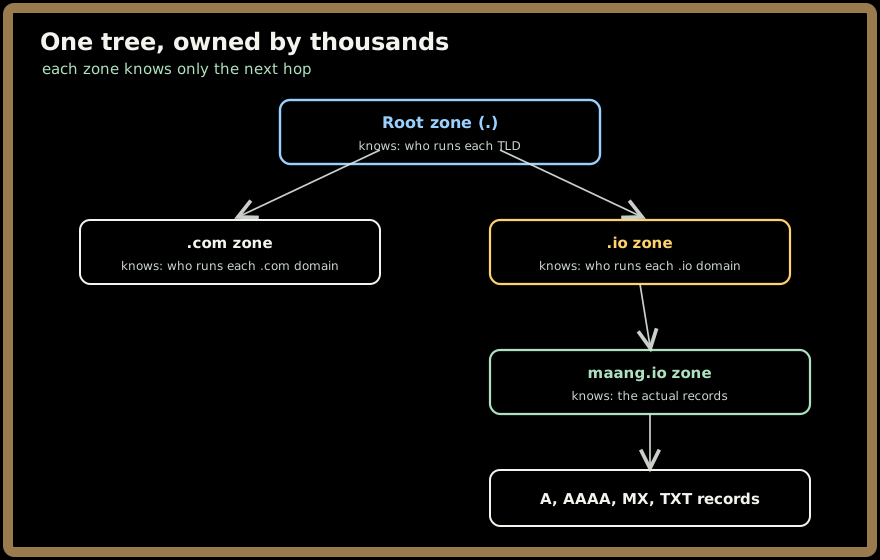
DNS is built exactly like that postal hierarchy. Part 1 introduced the tree — root, TLD, authoritative. This part opens up the machinery: how a slice of the tree (a zone) is owned and delegated, how the same IP address can answer from hundreds of cities at once (Anycast), and how it all stays consistent without any central database. The recurring image throughout: the phone book is split into sections, and each section is run by a different company, yet you can still look up any number.
The one-line idea: DNS scales to the whole internet by being a tree of independently-owned zones — each level delegates authority downward, each zone is served redundantly, and Anycast plus caching make the global tree feel local and instant.
Sign in to continue reading
The rest of this lesson is available with a free account. Signing in with Google or Microsoft is free.
Sign in to read the full lesson