CAP Theorem — Part 3: CAP in Practice — Real Systems & Trade-offs
What is this?
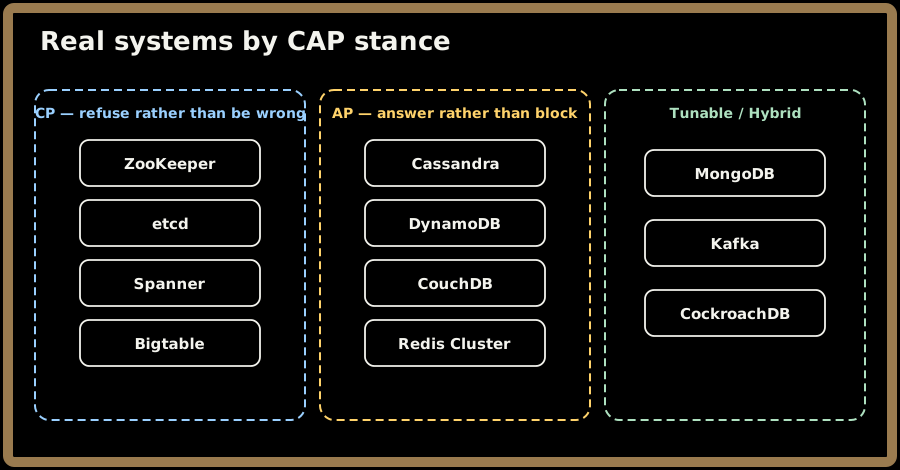
Parts 1 and 2 gave you the theory. This is where the rubber meets the road: what do the databases on your résumé actually do the moment a network partition hits? Because here's the uncomfortable truth — every system in this chapter made the dinner-planner's choice from Part 1, baked it into its architecture, and lives with the consequences. Spanner refuses to leave the house. Cassandra picks a restaurant and goes. Kafka lets you decide with a config flag.
Knowing which choice each system made — and crucially, how it behaves while partitioned — is the difference between "I've heard of Cassandra" and "I know Cassandra is AP, so I'd never put a bank ledger on it." That distinction is what interviewers are probing for, and it's what keeps you from a 3am page when a single availability zone blips.
The one-line idea: every real distributed database has already chosen CP or AP and wired it into its bones — this chapter maps the major systems onto that choice so you can pick the right tool and predict its behavior during the failure that will eventually come.
Sign in to continue reading
The rest of this lesson is available with a free account. Signing in with Google or Microsoft is free.
Sign in to read the full lesson